
Ingredients
Equipment
Method
- Set five heatproof shallow molds or inverted ramekins beside the stove on a stable, heatproof surface. Arrange the molds so the cooked coral lace tuiles can be shaped immediately after leaving the skillet. Keep a thin silicone or offset spatula and a mesh splatter screen nearby. Choose gently curved molds rather than deep cups, since the delicate lace is easier to shape into shallow shells without breaking.
- In a mixing bowl, whisk together 120 ml of water, 40 ml of sunflower oil, and 15 g of all-purpose flour until smooth. Add a small amount of food-grade white gel coloring suitable for heated preparations, following the coloring manufacturer's directions. The mixture should remain thin and pourable rather than thick like pancake batter. Whisk again before cooking each round because the flour can settle and the oil can separate. Do not add extra flour simply to thicken the mixture, as that can reduce the delicate lace pattern.
- Warm a good-quality nonstick skillet over medium heat. Pour approximately 1 tablespoon of the coral lace batter into the skillet to make a small test tuile. The batter will bubble vigorously as moisture evaporates and may splatter, so use a mesh splatter screen and keep your hands away from the pan. Allow the surface to become matte and the bubbling to slow. The edges should begin releasing from the pan as the tuile dries. If it browns before drying, reduce the heat. If very little lace develops, whisk the batter thoroughly, adjust the pan temperature slightly, and try another small test round.
- Once the test tuile cooks successfully, whisk the batter again and pour approximately 25 to 30 ml into the nonstick skillet for each larger round, adjusting the amount to suit the prepared molds. Allow each round to cook until the bubbling slows, the surface looks dry, and the lace releases cleanly from the pan. Cooking time varies depending on the skillet and heat level. Whisk the remaining batter between rounds to keep the ingredients evenly distributed. Carefully remove excess oil from the skillet between batches when necessary. Continue preparing enough rounds for approximately five shallow dessert shells.
- While each cooked coral lace round is still slightly flexible, carefully lift it from the skillet using a thin silicone or offset spatula. Immediately drape the round over a prepared shallow heatproof mold or inverted ramekin. Gently guide the edges into a shallow curved shape using utensils rather than touching the hot tuile directly. Avoid pressing the delicate lace into a deep shape. Allow the formed shell to cool completely before lifting it from the mold. Repeat with the remaining rounds. If any shell cracks, reserve the broken pieces as decorative lace shards for serving.
- Place 250 g of cold mascarpone cheese, 100 g of smooth Biscoff cookie butter, 30 g of sifted powdered sugar, and 1 teaspoon of vanilla extract in a mixing bowl. Beat with an electric hand mixer on low speed just until the ingredients form a smooth, evenly combined cream base. Stop to scrape the sides of the bowl if necessary. Avoid prolonged beating because mascarpone can become grainy when overmixed.
- In a separate mixing bowl, whip 200 ml of cold heavy whipping cream with an electric hand mixer until medium-stiff peaks form. The cream should hold its shape while remaining smooth. Gently fold approximately one-third of the whipped cream into the Biscoff mascarpone mixture to loosen the base. Add the remaining whipped cream in two additions, folding carefully until evenly combined and fluffy. Cover the filling and refrigerate for approximately 30 minutes while the coral lace shells cool completely.
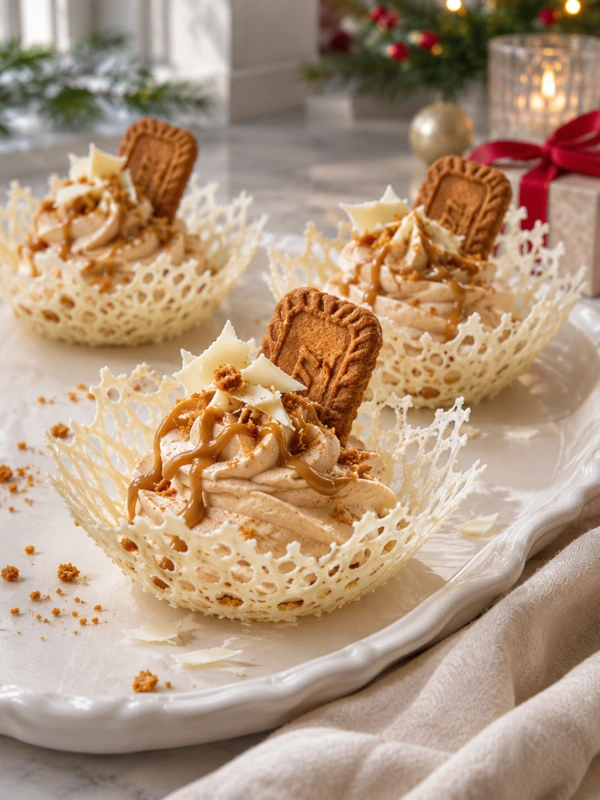
- Shortly before serving, carefully transfer each completely cooled coral lace shell onto its own dessert plate. Place the chilled Biscoff mascarpone cream in a piping bag fitted with a large star tip, if desired, or use a spoon. Pipe or spoon a modest swirl of cream into the center of each shallow shell, keeping the weight away from the fragile edges. Avoid overfilling because the lace can crack beneath excessive weight. If any cream remains after filling the five shells, serve it separately in small dessert glasses.
- Warm the remaining 3 tablespoons of Biscoff cookie butter in short microwave bursts until just pourable, then allow it to cool until barely warm. Drizzle a small amount over each filled shell. Sprinkle the desserts with crumbs made from 4 finely crushed Biscoff cookies, then arrange the 40 g of white chocolate shards or curls among the five servings. Tuck 1 whole Biscoff cookie into the center of each cream swirl at a slight angle, supporting its weight with the filling. Finish with a light dusting of powdered sugar, using up to 1 tablespoon total. Serve the Biscoff White Chocolate Snow Coral Lace Cups immediately to preserve their delicate, crisp texture.
Notes
This recipe makes approximately 5 shallow dessert cups, depending on the diameter of the coral lace rounds and any breakage during shaping. For the shells, whisk 120 ml water, 40 ml sunflower oil, and 15 g all-purpose flour with food-grade white gel coloring suitable for heated preparations. The batter should remain thin and pourable. Whisk before cooking each round because the flour may settle and the oil may separate. Use a good-quality nonstick skillet over medium heat and begin with a small test tuile using approximately 1 tablespoon of batter. The batter will bubble and may splatter as the water evaporates, so use a mesh splatter screen and keep your hands away from the hot oil. Adjust the heat if the tuile browns too quickly or develops too little lace. Once the technique works, cook approximately 25 to 30 ml of batter per round. Lift each dry, flexible tuile with a thin spatula and drape it over a shallow heatproof mold or inverted ramekin. Shape carefully with utensils and let it cool completely. Deep shaping can break the delicate lace. Reserve cracked pieces as decorative shards. For the filling, use cold mascarpone and cold heavy whipping cream with approximately 35 to 36% milk fat. Beat the mascarpone briefly with the smooth Biscoff cookie butter, powdered sugar, and vanilla until combined. Whip the heavy cream separately to medium-stiff peaks, then fold it gently into the mascarpone mixture. Refrigerate the filling for approximately 30 minutes. Avoid overbeating mascarpone, which may cause a grainy texture. Keep the cooked shells completely dry in an airtight container at room temperature and refrigerate the filling separately until assembly. For the best crisp texture, fill the shells shortly before serving. Set each shell on its serving plate before piping or spooning in the cream, and avoid overfilling. Warm the 3 tablespoons of Biscoff cookie butter for decorating until just pourable, then drizzle lightly over the filling. Add crushed Biscoff biscuits, thin white chocolate shards or curls, and one whole Biscoff cookie per serving. Finish with a light dusting of powdered sugar immediately before serving. The whole cookie may be positioned at a slight angle, with its weight supported by the cream rather than the fragile outer edge. If shells break or shaping proves difficult, serve the filling in small dessert glasses with flat or broken coral lace pieces on top. The filling can be made up to one day ahead. Prepare the shells on the serving day and keep them separate from moisture. Refrigerate assembled leftovers promptly and consume within two days, understanding that the shells will soften. Freezing assembled desserts is not recommended. All ingredient quantities, nine numbered steps, and preparation times come from the supplied article. Nutrition and cost are estimates based on five servings.