
Ingredients
Equipment
Method
- Place a mixing bowl and whisk in the refrigerator briefly to chill. Pour 180 ml of cold heavy whipping cream into the chilled bowl. Add 35 grams of powdered sugar and 1/2 teaspoon of vanilla extract. Beat with an electric mixer on medium speed until the mixture thickens and forms firm peaks that hold their shape. Avoid overwhipping, which can make the cream grainy. Cover the bowl and refrigerate the vanilla cream while preparing the crispy Biscoff lace shells.
- Arrange six small heatproof ramekins or metal molds upside down on a tray, using molds with bases approximately 2 inches wide. These will support the hot lace rounds as they cool into cup shapes. Place a thin, wide spatula, paper towels, and a clean plate beside the cooking area. Prepare everything before heating the skillet because the delicate lace must be shaped quickly while it is still warm and flexible.
- In a medium mixing bowl, combine 100 ml of water, 30 ml of neutral vegetable oil, 12 grams of all-purpose flour, 1 teaspoon of finely ground Lotus Biscoff cookies, 1/4 teaspoon of caramel extract, and a small pinch of fine salt. Add one drop of caramel-brown food coloring if desired. Whisk thoroughly until the flour is fully dispersed and the mixture is smooth. The batter should be thin and pourable rather than thick like pancake batter. Stir the mixture again before cooking every shell because the oil and water separate quickly.
- Heat a small nonstick skillet over medium heat. Stir the lace batter thoroughly, then pour approximately 1 1/2 tablespoons into the skillet. Gently tilt the pan to spread the mixture into a thin round approximately 4 inches across. Allow the batter to cook undisturbed as it bubbles and develops small openings across the surface. The mixture may splatter as the water evaporates, so keep your hands clear of the hot pan. Begin checking the round after approximately 2 minutes, adjusting the cooking time as needed for your skillet and heat setting.
- Watch the cooking lace round carefully. As the water evaporates, bubbling should slow, the surface should lose its wet appearance, and the edges should begin to release from the skillet. If the lace darkens before it dries, reduce the heat slightly for the next round. If the round tears when lifted, allow the next one to cook longer or make a slightly smaller circle. The shell should be set enough to lift but still flexible enough to shape while hot.
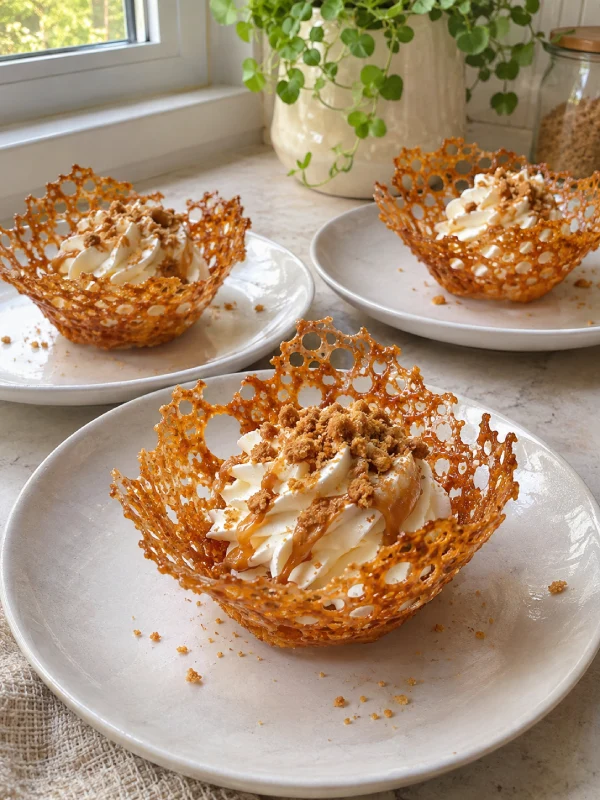
- Carefully slide a thin, wide spatula beneath the cooked lace round and lift it from the skillet. Briefly touch the underside to a paper towel to remove excess oil. Immediately drape the warm round over an inverted heatproof ramekin or metal mold. Using a utensil, gently guide the edges downward to form a shallow edible cup, keeping your fingers away from the hot shell. Allow the lace to cool completely until crisp, then carefully remove it from the mold. Wipe excess oil from the skillet if necessary, stir the batter again, and repeat until approximately six delicate lace dessert cups have been prepared.
- Place each completely cooled Biscoff lace shell on an individual dessert plate. Spoon or pipe approximately 2 to 3 tablespoons of the chilled vanilla whipped cream into each cup, using a modest amount so the delicate shells remain supported. Warm 3 tablespoons of smooth Lotus Biscoff cookie butter in a microwave-safe bowl in short intervals until pourable, then allow it to cool until barely warm. Drizzle the cookie butter over the vanilla cream and divide approximately 2 tablespoons of crushed Biscoff cookies evenly among the six desserts. Serve immediately while the lace cups remain crisp. Keep any unused cream refrigerated and store empty lace shells separately in a dry, airtight container.
Notes
Use 100 ml of water for the lace batter and whisk it thoroughly with neutral oil, flour, finely ground Biscoff cookies, caramel extract, and a small pinch of salt. The batter should be very thin, much thinner than pancake batter. Stir before cooking every portion because the oil and water separate quickly. Use a small nonstick skillet over medium heat and pour approximately 1 1/2 tablespoons of batter per shell, tilting the pan to create a thin round about 4 inches wide. The mixture may bubble and splatter as the water evaporates, so keep your hands away from the hot skillet. Begin checking after approximately 2 minutes, when the bubbling slows, the surface looks dry, and the edges begin releasing. Carefully lift each lace round with a thin spatula and briefly drain excess oil on a paper towel. Immediately shape the warm lace over a small inverted heatproof ramekin or metal mold approximately 2 inches wide. Use a utensil rather than your fingers to guide the hot edges downward. Let each shell cool completely before removing it from the mold. For the vanilla cream, use cold heavy whipping cream and beat with 35 grams of powdered sugar and vanilla until firm peaks form. Refrigerate the cream until ready to assemble. Use approximately 2 to 3 tablespoons of cream per lace cup, depending on the shell's strength. Warm smooth Biscoff cookie butter only until pourable, then cool until barely warm before drizzling. Add crushed cookies immediately before serving. Assemble the dessert cups just before serving because moisture from the cream will soften the delicate lace. Vanilla cream can be made up to 24 hours ahead and stored covered in the refrigerator. Prepare shells on the day of serving and keep them dry in an airtight container at room temperature. The source specifies 100 ml water, 1 teaspoon ground Biscoff cookies, and 35 grams powdered sugar; the remaining ingredient amounts, cost, and nutrition are estimates based on six dessert cups.