
Ingredients
Equipment
Method
- Place 200 g of fresh or frozen raspberries, 60 g of granulated sugar, and 1 tablespoon of lemon juice in a small saucepan. Warm over medium-low heat, stirring until the berries release their juices and the sugar dissolves. Bring to a gentle simmer and cook for approximately 8 to 12 minutes, stirring regularly, until the berries break down and the mixture becomes thick and spoonable. Frozen berries may require slightly more time. A spoon drawn across the bottom of the saucepan should leave a brief trail. The compote will continue thickening as it cools.
- Transfer the cooked raspberry compote to a shallow heatproof container. Allow the steam to escape, then refrigerate until completely cold. For a smoother texture, press the warm compote through a fine-mesh sieve before chilling. If the strained compote looks too thin, return it to the saucepan and simmer briefly until it thickens, then cool again. The compote must be fully cooled before assembly because warm fruit can soften the delicate lace shells and loosen the mascarpone cream.
- Arrange approximately six heatproof shallow molds or inverted ramekins beside the stove on a stable, heatproof surface. Keep a thin heatproof spatula and mesh splatter screen nearby. The coral lace rounds become brittle shortly after leaving the skillet, so prepare the shaping station before cooking. Choose shallow molds with gently curved surfaces rather than deep bowls to reduce the risk of cracking the finished tuiles.
- In a mixing bowl, whisk together 120 ml of water, 40 ml of sunflower oil, and 15 g of all-purpose flour until smooth. Add a small amount of food-grade white coloring suitable for heated preparations according to the manufacturer's instructions. Whisk until the color is evenly distributed and the batter remains thin and pourable. Whisk again before cooking each round because the flour may settle and the oil can separate from the water.
- Heat a good-quality nonstick skillet over medium heat. Pour approximately 1 tablespoon of coral lace batter into the skillet to test the temperature. The batter will bubble and may splatter while the water evaporates, so place a mesh splatter screen over the pan and keep your hands away from the hot oil. Let the surface become matte and watch for the edges to release. If the round begins browning before drying, reduce the heat. If it stays thick with very few lace holes, whisk the batter thoroughly and adjust the heat gradually before making another small test round.
- Once the test tuile has cooked successfully, whisk the batter again and pour approximately 25 ml into the nonstick skillet for each larger lace round, adjusting the quantity to suit your pan and shallow molds. Cook the rounds one at a time until bubbling slows, the surface looks dry, and the lace can be lifted cleanly. Avoid unnecessary browning to preserve the white-to-ivory appearance. Remove excess oil from the skillet between rounds when necessary and whisk the batter immediately before pouring each new round. Continue until approximately six dessert shells have been made.
- Carefully lift each cooked lace round from the skillet with a thin, heatproof spatula while it is still slightly flexible. Immediately drape it over a shallow heatproof mold or inverted ramekin. Guide the edges gently with utensils rather than touching the hot tuile directly. Do not force the delicate lace into a deep bowl shape. Allow the shell to cool completely before removing it from the mold. Repeat with the remaining rounds and store the cooled shells in a dry location until assembly. Reserve any broken pieces as decorative shards or for serving in dessert glasses.
- Place 250 g of cold mascarpone cheese, 20 g of sifted powdered sugar, and 1 teaspoon of vanilla extract in a mixing bowl. Using an electric mixer on low speed, beat the ingredients briefly until smooth and evenly combined. Stop mixing as soon as the mixture comes together because excessive beating may make the mascarpone grainy.
- Pour 240 ml of cold heavy whipping cream into a separate chilled bowl. Whip with an electric mixer until the cream forms firm, smooth peaks. Gently fold approximately one-third of the whipped cream into the mascarpone mixture to loosen it. Add the remaining whipped cream in two additions, folding carefully until no visible streaks remain and the filling is fluffy. Cover and refrigerate the mascarpone cream for approximately 20 to 30 minutes before piping into the coral lace shells.
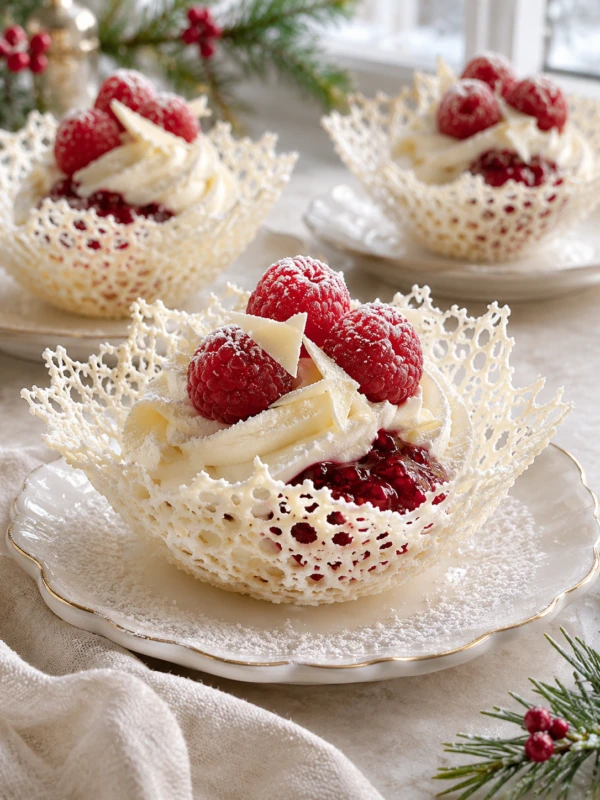
- Shortly before serving, arrange each completely cooled coral lace shell directly on its individual dessert plate. Using a piping bag fitted with a large star tip or a spoon, place a modest layer of chilled mascarpone cream in the center of each shell. Add approximately 1 to 2 teaspoons of completely cold raspberry compote, keeping the fruit away from the exposed lace edges. Pipe another small swirl of cream beside or over the compote. Avoid overfilling the shells because the delicate lace can break under excessive weight. Any extra cream or compote can be served separately in small dessert glasses.
- Decorate each filled cup with 3 fresh raspberries that have been washed and thoroughly dried, using 18 berries total. Divide 80 g of thin white chocolate shards or curls among the six desserts, arranging them gently to create a snowy appearance. Add up to 2 tablespoons of freeze-dried raspberry crumbs if desired. Finish with a delicate dusting of powdered sugar, using 10 g total across the six cups. Serve the Snowy Raspberry White Chocolate Coral Lace Cups promptly after assembly so the shells retain their crisp texture.
Notes
This recipe makes approximately 6 small dessert cups, depending on the size of the coral lace rounds and any breakage during shaping. The supplied recipe is a developed version that has not been fully kitchen-tested; coral lace shells require practice, so begin with a small test round. For the raspberry compote, combine 200 g fresh or frozen raspberries, 60 g granulated sugar, and 1 tablespoon lemon juice in a saucepan. Simmer gently for approximately 8 to 12 minutes until thick and spoonable, then cool completely before assembly. Frozen raspberries may need a little longer to reduce. For smoother compote, press the warm mixture through a fine sieve and reduce again if it becomes too thin. For the lace shells, whisk 120 ml water, 40 ml sunflower oil, and 15 g all-purpose flour with a small amount of food-grade white coloring suitable for heated preparations. The batter should be thin and pourable. Whisk before cooking each round because the flour settles and the oil can separate. Use a good-quality nonstick skillet over medium heat and start with approximately 1 tablespoon of batter for a test round. The mixture will bubble and may splatter, so use a mesh splatter screen and keep hands away from the hot oil. Once the test succeeds, cook approximately 25 ml of batter for each shell, adjusting for the skillet and mold size. Allow each round to dry and release cleanly without excessive browning. Shape promptly over shallow heatproof molds or inverted ramekins while the tuiles remain flexible, guiding the edges with utensils. Allow the shells to cool completely and keep them dry until serving. For the filling, briefly mix 250 g cold mascarpone with 20 g sifted powdered sugar and 1 teaspoon vanilla extract on low speed until smooth. Whip 240 ml cold heavy cream separately to firm, smooth peaks, then fold it into the mascarpone mixture in three additions. Refrigerate the filling for approximately 20 to 30 minutes before piping. Avoid overmixing mascarpone or overwhipping the cream, which can make the texture grainy. Place each cooled shell on its serving plate before filling. Pipe a modest amount of mascarpone cream into the center, add approximately 1 to 2 teaspoons of completely cooled raspberry compote, and finish with a small additional swirl of cream. Keep the filling away from the fragile lace edges and do not overfill. Decorate each cup with 3 washed and thoroughly dried fresh raspberries, thin white chocolate curls or shards, optional freeze-dried raspberry crumbs, and a light dusting of powdered sugar. Assemble just before serving because moisture from the compote and cream softens the lace. The compote and mascarpone cream may be prepared one day in advance and refrigerated separately. Make the lace shells on the day of serving, cool them completely, and store in a dry airtight container at room temperature. Refrigerate leftover filled cups promptly and consume within two days, although the shells will soften. Store extra compote refrigerated for 3 to 4 days and unused mascarpone cream for up to two days, depending on the freshness of the dairy ingredients. Freezing assembled cups is not recommended. Broken lace shells can be used as decorative shards in layered dessert glasses. The article specifies 35 minutes preparation, approximately 30 minutes cooking, about 1 hour of cooling and chilling, and an approximate total time of 2 hours because some stages overlap. The recorded custom cooling and chilling time is 60 minutes, while total time follows the article's approximately 120-minute overall duration rather than adding all stages sequentially. Nutrition and cost are estimates for six dessert cups.