Disclaimer: This content is for educational purposes only, not medical advice. Always consult with a doctor before making significant changes to your diet, especially if you have pre-existing health conditions.
When I first tried making gluten free sourdough bread, I didn’t even know what a starter was. I had just moved into my new kitchen in Asheville, and like many, I was overwhelmed by the idea of wild yeast and fermentation. No fancy tools, no baking courses under my belt, just curiosity and a craving for bread that didn’t come wrapped in plastic.
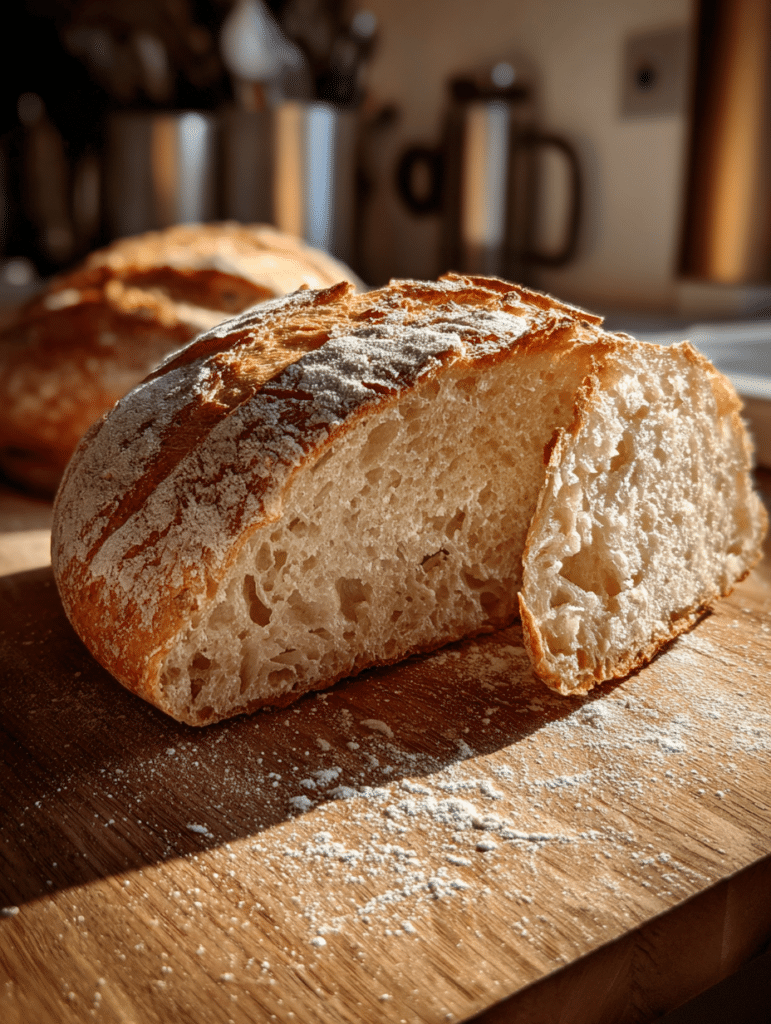
I remember that first loaf. Dense, cracked, and sour in all the wrong ways. But something about the process—the quiet fermentation, the smell of dough resting overnight, kept me going. A few years (and a dozen flour blends) later, I finally found my rhythm. The result? A crusty, golden sourdough with a chewy, tender crumb that’s 100% gluten free and wildly satisfying.
Hi, I’m Chloe White—owner of wepostrecipes, born and raised in Asheville, North Carolina. I didn’t grow up knowing how to cook—I burned boxed mac and cheese and thought a colander was optional. But learning to make recipes like this one taught me that good food doesn’t require perfection—it just asks you to show up.
So whether you’re newly gluten free or just curious about real bread that actually nourishes you, you’re in the right place. My gluten free sourdough bread recipe is simple, gut-friendly, and doesn’t require a bread bible to get right. Let’s bake
IN THIS ARTICLE
Key Takeaways: What You Need to Know
Gluten free sourdough bread is a naturally fermented bread made without wheat. It uses a gluten free sourdough starter and slow-rise fermentation for flavor and texture. You only need 4 ingredients to get started. It’s perfect for gluten-intolerant eaters and simple enough for beginners. No special tools required.
What Is Gluten Free Sourdough Bread?
What makes it sourdough and gluten free?
Gluten free sourdough bread is a bread that’s both fermented and wheat-free. Traditionally, sourdough relies on wild yeast and beneficial bacteria to naturally leaven the dough. Instead of commercial yeast, it uses a “starter”—a bubbly mix of flour and water left to ferment over several days.
For gluten free versions, the same process applies, but with flours that don’t contain gluten—like brown rice, sorghum, or buckwheat. The fermentation helps break down starches and unlocks that familiar tangy flavor sourdough lovers crave.
Because there’s no wheat gluten to provide structure, gluten free sourdough requires a bit of creativity. But the reward? A loaf that’s crusty on the outside, tender inside, and much easier to digest.
Unlike most store-bought gluten free breads—which often rely on gums and stabilizers—homemade versions like this one rely on natural fermentation, whole ingredients, and traditional methods that just happen to be gluten free.
Why gluten free sourdough matters for sensitive guts
Sourdough isn’t just about flavor. It’s about function. Thanks to its fermentation process, sourdough has long been praised for being gentler on the digestive system. When made gluten free, it becomes even more accessible—especially for people with celiac disease or gluten sensitivity.
Here’s why it works:
- The fermentation process breaks down tough-to-digest compounds.
- It boosts the bioavailability of minerals like iron and zinc.
- It’s naturally lower on the glycemic index.
- It supports gut-friendly bacteria, similar to fermented foods like yogurt or kefir.
Even Beyond Celiac, a leading national advocacy organization, notes that gluten free sourdough made with verified gluten free flours and starters is a safe and beneficial option for many.
Whether you’re eating gluten free by necessity or choice, sourdough offers a way back to bread that feels like the real thing—because it is.
The Best Flour for Gluten Free Sourdough Bread
Gluten free flours that actually work
One of the biggest myths about gluten free sourdough is that you need a complicated flour blend. Truth is, you can make a solid loaf with just a few pantry staples—no need for starch-heavy mixes or commercial blends full of fillers.
Here are some flours that work beautifully for sourdough:
- Brown rice flour: light and mild, great for starters and structure
- Sorghum flour: adds softness and subtle sweetness
- Buckwheat flour: earthy, high in protein, adds depth
- Millet flour: neutral, helps with a balanced crumb
- Teff or quinoa: nutrient-dense, strong fermentation support
- Cassava or arrowroot: binders for elasticity (small amounts)
The best gluten free sourdough bread recipes often rely on a blend of 2–3 flours for optimal rise and texture. That’s how we achieve a soft interior without gums or commercial yeast.
Still exploring flours? You might love our naturally balanced gluten free bread recipe for more ideas on structure and softness.
Can you use just one flour? (Yes—but… here’s how)
If you’re just starting out, you might wonder: Can I make gluten free sourdough bread with only one flour? The short answer? Yes. But you’ll need to manage your expectations.
Single-flour loaves can:
- Be more dense
- Crumble if overbaked
- Have a limited flavor profile
- Rise more slowly or unevenly
That said, if you’re aiming for simplicity, brown rice flour is a solid starter choice. It works great for feeding your gluten free sourdough starter and produces consistent results. Buckwheat and sorghum also work well solo, especially when paired with a mature starter.
Want to keep it really simple? Try a 4-ingredient gluten free sourdough bread recipe using a mix of brown rice and sorghum—you’ll get a better rise and more flavor while still keeping the ingredient list short.
How to Make a Gluten Free Sourdough Starter
The 7-day starter that actually works
You can’t make gluten free sourdough bread without a good starter. Think of your starter as the heart of your sourdough—it’s what makes the bread rise, taste tangy, and feel alive. And yes, it’s absolutely possible to make one without any gluten.
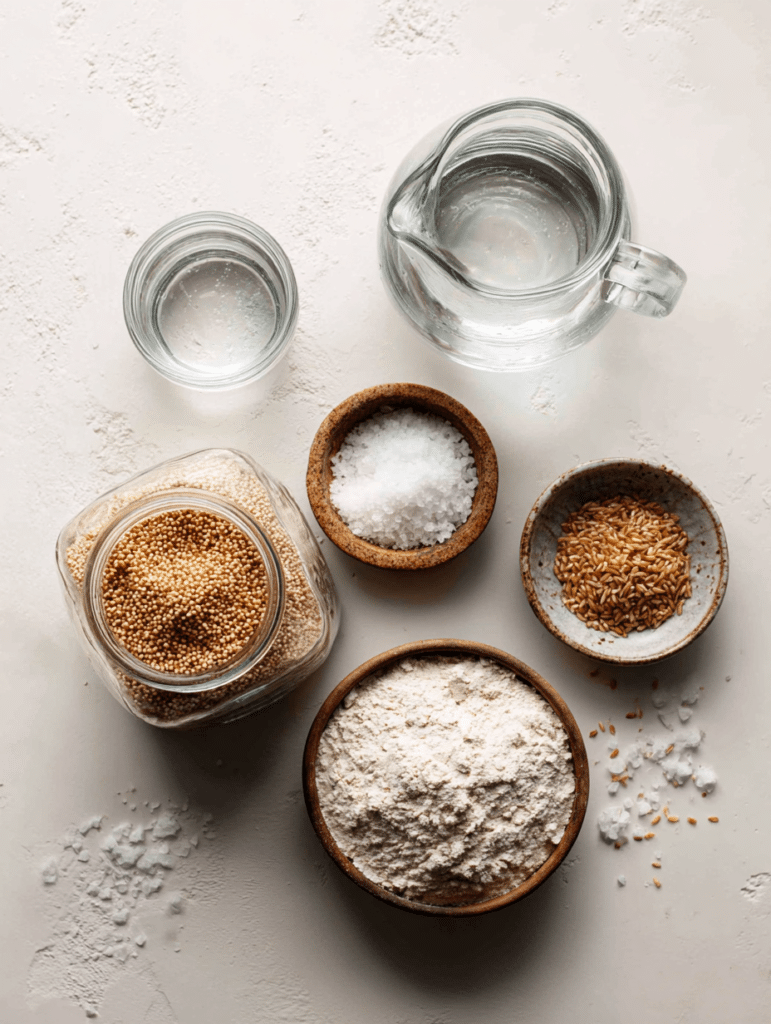
All you need are two ingredients:
- Gluten free flour (brown rice flour is best for starters)
- Filtered water (avoid chlorinated tap water—it can slow fermentation)
Here’s the basic plan:
| Day | What to Do |
|---|---|
| 1 | Mix 1/2 cup brown rice flour + 1/4 cup filtered water in a clean jar. Cover loosely. |
| 2–4 | Feed every 24 hours: discard half, then add fresh flour and water in the same ratio. |
| 5–7 | Starter should smell tangy and bubble up 4–6 hours after feeding. Ready to bake when it doubles consistently. |
It’s okay if the starter smells sharp or sour—that’s good. And a little clear or grayish liquid on top? That’s called hooch. Just stir it in or pour it off.
When in doubt, visit our full gluten free sourdough starter guide, it breaks down every step with photos, FAQs, and troubleshooting tips.
Troubleshooting your starter (smells, bubbles, mold)
Let’s talk about what’s normal and what’s not during your gluten free sourdough journey.
Totally normal:
- A strong sour or vinegar smell
- A layer of hooch on top
- Slow bubbling the first 3 days
- Slight color changes (grayish or beige)
Not normal:
- Bright pink, orange, or green streaks
- Fuzzy mold
- Rotten egg smell
If you see mold, toss it. Otherwise, most issues can be fixed by feeding more often or switching to a warmer spot in your kitchen. Starters love consistency.
Feeling stuck? You can always “reset” with just a spoonful of healthy starter and fresh flour/water. That’s the beauty of sourdough—it’s forgiving, even when you’re learning.
Gluten-free Sourdough Bread
Equipment
- Mixing bowl
- Wooden spoon or silicone spatula
- Parchment paper
- Loaf pan or baking tray
- Sharp knife or lame
Ingredients
- 1 cup active gluten-free sourdough starter
- 1.5 cups gluten-free flour blend (e.g., brown rice + sorghum)
- 0.75 cup filtered water
- 1 tsp sea salt
Instructions
- In a bowl, combine 1 cup starter, 1½ cups gluten-free flour, ¾ cup water, and 1 tsp salt. Stir until a shaggy dough forms.
- Cover the bowl loosely and let the dough rise at room temperature for 5–8 hours, until puffed and domed.
- Shape dough into a round or oval loaf using wet hands. Transfer to parchment-lined loaf pan or baking tray.
- Let rise for 1–2 hours at room temperature or refrigerate overnight for better flavor.
- Preheat oven to 450°F. Score the top of the loaf and bake for 40–45 minutes.
- Let cool completely (at least 2 hours) before slicing to avoid a gummy texture.
Notes
Nutrition
The Easy 4-Ingredient Gluten Free Sourdough Bread Recipe
Basic, crusty, no-fuss sourdough loaf
You don’t need fancy equipment or a background in artisan baking to make gluten free sourdough bread. In fact, this version uses just four simple ingredients:
- Active gluten free sourdough starter
- Gluten free flour blend (like brown rice + sorghum)
- Filtered water
- Sea salt
That’s it.
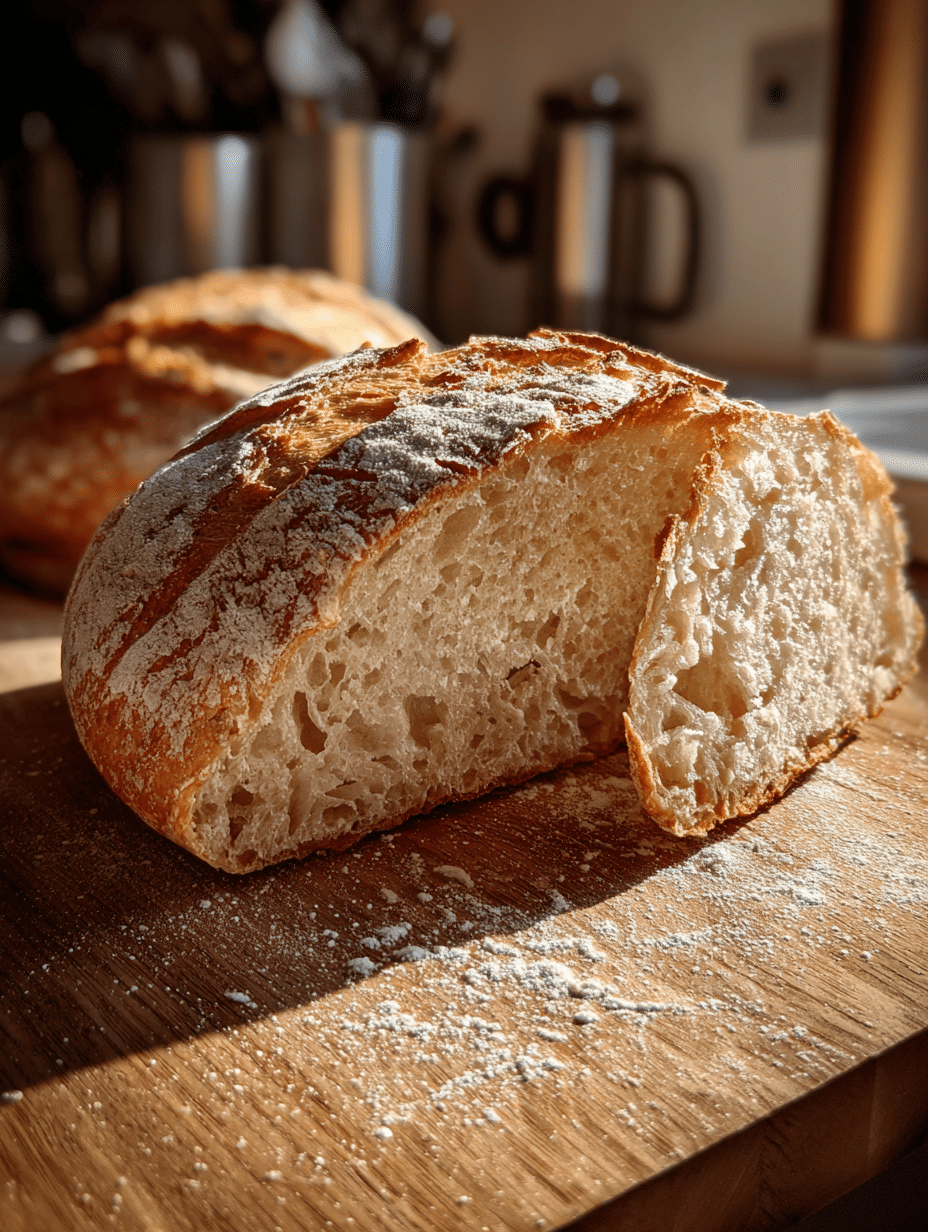
This loaf is naturally leavened, perfectly crusty, and deliciously chewy on the inside. It’s also gum-free and xanthan-free—just real food and old-world technique.
Here’s the simplified method:
- Mix the dough – In a bowl, combine 1 cup of starter, 1 ½ cups flour, ¾ cup water, and 1 tsp salt. Stir until it forms a shaggy dough.
- Bulk rise – Cover loosely and let it ferment at room temp for 5–8 hours, until puffed and slightly domed.
- Shape – Gently shape into a round or oval loaf using wet hands or a silicone spatula. Place into a parchment-lined loaf pan or baking sheet.
- Final proof – Let rise another 1–2 hours, or cover and refrigerate overnight for better flavor.
- Score and bake – Preheat oven to 450°F. Score the top and bake 40–45 minutes.
- Cool fully – Let it rest for at least 2 hours before slicing to avoid a gummy center.
Need help visualizing the process? We include step-by-step shaping and baking images in the next section to guide you.
Looking to experiment with flavor? Consider mixing in roasted garlic, seeds, or dried herbs. Or check out our gluten free banana bread recipe for sweet loaf inspiration using similar techniques.
No fancy tools needed—just a bowl and your oven
One of the biggest perks of this recipe? You don’t need a Dutch oven. While traditional sourdough often relies on heavy cast iron cookware, this bread can be baked in:
- A basic loaf pan
- A parchment-lined sheet pan
- A ceramic baking dish
Want a crispy crust? Add steam by placing a shallow metal pan of hot water on the oven floor during baking. This mimics the steam of pro ovens and helps that outer crust crackle.
And if you’re still easing into gluten free baking, don’t worry—this dough is wet and a little sticky, but that’s what helps it bake up tender and airy.
For more gluten free bakes that don’t need fancy tools, try our gluten free muffins or our one-bowl gluten free bagels—both easy and crowd-pleasing.
Pro Tips for Perfect Gluten Free Sourdough
Crumb, crust, and rise – mastering the feel
Even with the best recipe, gluten free sourdough bread takes a bit of feel—and that’s where these tips make all the difference. Here’s how to take your bake from good to bakery-quality:
- Hydration is key – Gluten free dough should feel wetter than wheat dough. It’ll be sticky, almost like thick cake batter. That’s normal. Don’t add extra flour or it’ll turn out dry.
- Cold ferment for more flavor – After shaping, pop the dough in the fridge overnight. The slow fermentation deepens the sour flavor and makes the crust beautifully golden.
- Use wet hands or tools – Forget kneading. Just stir, shape gently, and transfer using wet fingers or a silicone spatula.
- Steam it – Want that real sourdough crackle? Bake with steam for the first 20 minutes. Add a tray of boiling water or spray the oven walls (carefully).
- Cool completely – Let the loaf sit for at least 2 hours before slicing. Cutting too soon = gummy center.
If you’re after a truly easy gluten free sourdough bread recipe, these tweaks help you get consistent results—especially if you’re still learning how dough should behave without gluten.
Common mistakes to avoid
Most first-time gluten free bakers make the same few mistakes. Here’s how to dodge them:
- Using an immature starter – If your starter isn’t doubling after feeding, it’s not ready. Give it another day or two. A weak starter = flat loaf.
- Overproofing – Gluten free dough rises faster than you think. If it overproofs, it might collapse in the oven. Watch for the dough to puff slightly, not double.
- Skipping the scale – Cup measurements vary wildly. For best results, use a digital kitchen scale to weigh your ingredients.
- Cutting too early – The crumb sets as it cools. Cut it hot and you’ll get a dense or gummy texture every time.
Need more help avoiding soggy middles or sunken loaves? Try baking a smaller batch first, or explore our gluten free blueberry muffins—a faster recipe with fewer variables and similar structure tricks.
Frequently Asked Questions – Gluten Free Sourdough Bread
Is gluten free sourdough bread healthy?
Yes. It’s naturally fermented, which may improve digestion and nutrient absorption. When made with whole grain gluten free flours, it offers more fiber and fewer additives than store-bought bread. It’s also easier on the gut for people with gluten sensitivity.
Can you make gluten free sourdough in a bread machine?
Absolutely. Use a gluten free setting if your machine offers one. Add your starter, wet ingredients, then dry. Let it rise fully before baking. Keep in mind: results vary by brand, so one or two test runs may be needed.
Why didn’t my gluten free sourdough bread rise?
Your starter may not be active enough. Make sure it doubles within 4–6 hours of feeding. Overproofing or using too much water can also cause collapse. Use room temperature water and proof in a warm space for best results.
How long does homemade gluten free sourdough bread last?
At room temperature, it lasts 3–4 days in a sealed bag or wrapped in a tea towel. For longer storage, slice and freeze the loaf. To reheat, toast directly from frozen or warm in the oven.
Is it cheaper to make gluten free sourdough at home?
Yes. Most store-bought gluten free breads cost $8–$10 per loaf. Homemade sourdough, made with basic flours and a starter you maintain yourself, costs a fraction of that—especially over time.
Can I make gluten free sourdough bread without xanthan gum?
Yes, and many recipes skip it entirely. Natural binders like psyllium husk, chia gel, or flaxseed meal offer similar structure without synthetic gums. Our 4-ingredient version works beautifully without any gums.
Final Thoughts
Making gluten free sourdough bread isn’t just about avoiding wheat—it’s about reclaiming the joy of real bread. It’s crusty, chewy, naturally fermented, and surprisingly easy to make with just a little patience and the right starter. And the best part? You don’t need a bread machine or a culinary degree—just a bowl, a spoon, and the desire to learn.
If this is your first sourdough, let me say this clearly: you can do this. I started out not knowing how to boil pasta. Now I bake bread that my family requests by name. It’s okay to mess up a few loaves—that’s how you learn.
Ready to branch out? After you master this gluten free loaf, try our gluten free bagels for a chewy morning treat, or whip up a batch of gluten free pasta to turn dinner into something special. Hosting guests? Our gluten free cake makes a beautiful finish.
At wepostrecipes, my goal is to make real, good food approachable—one recipe at a time. Thanks for baking with me.