Disclaimer: This content is for educational purposes only, not medical advice. Always consult with a doctor before making significant changes to your diet, especially if you have pre-existing health conditions.
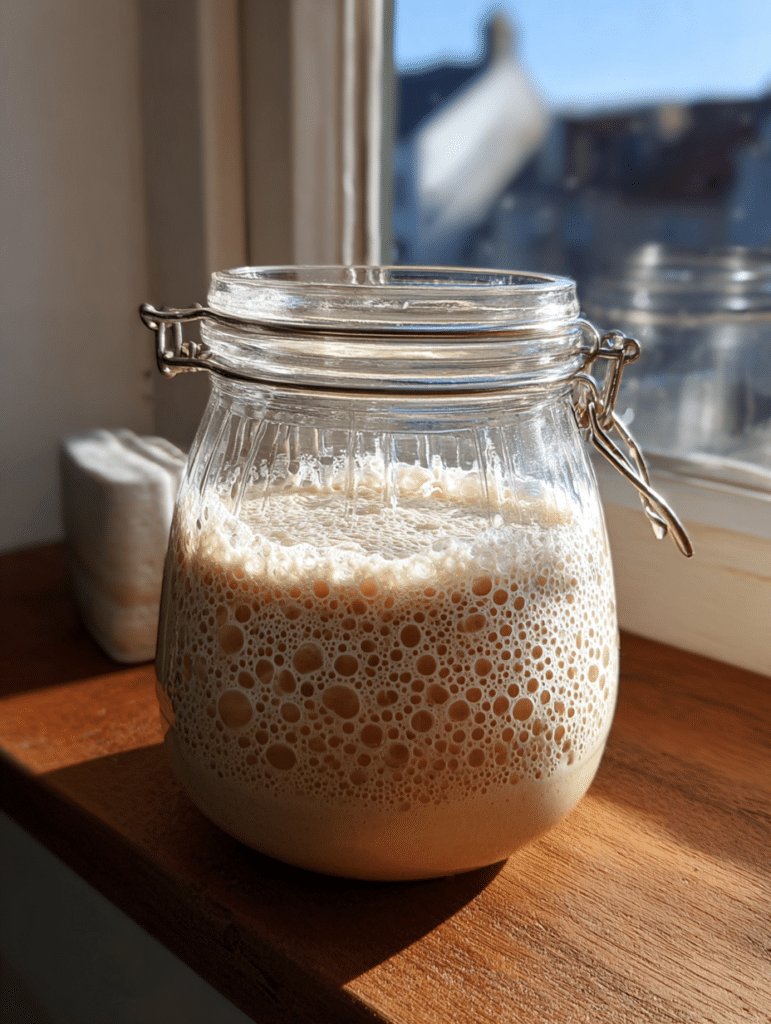
I’ll never forget the first time I tried to make sourdough. It bubbled over, smelled strange, and I swore off wild fermentation for years. Fast forward to a cozy Sunday in my Asheville kitchen—windows cracked, mountain breeze swirling flour through the air—and I gave it one more shot. This time, I went gluten free. Not because I had to, but because I wanted to prove it could be just as good.
And it was.
If you’ve been craving that chewy, tangy bite of sourdough without the gluten, this guide is for you. Whether you’re new to baking or finally ready to take the plunge, I’ll show you how to make a simple, trustworthy gluten free sourdough starter using just flour, water, and a little patience. No fancy tools. No weird ingredients. Just real, nourishing food you’ll be proud of.
IN THIS ARTICLE
KEY TAKEAWAYS: What You Need To Know
A gluten free sourdough starter is made from gluten free flour and water. It’s naturally fermented, safe for gluten-sensitive diets, and forms the base of flavorful, gut-friendly bread. Anyone can make it in a jar on the counter.
What Is a Gluten Free Sourdough Starter?
It’s Just Flour, Water, and Time—But It’s Alive
A gluten free sourdough starter is a fermented mixture of flour and water teeming with wild yeast and friendly bacteria. These microbes naturally exist in your environment and on the surface of grains. When given the right food (flour) and conditions (moisture, warmth), they multiply—creating a bubbly, tangy culture that acts as a natural leavening agent.
Unlike commercial yeast, which is isolated and highly controlled, a sourdough starter is alive and always evolving. It produces carbon dioxide to help dough rise, while the bacteria create acids that give sourdough its trademark flavor and help break down gluten-free flours, making them more digestible.
In traditional starters, wheat flour feeds the culture. But for those of us avoiding gluten, we turn to whole grain gluten-free flours like brown rice, sorghum, or buckwheat. These flours still contain the nutrients wild yeast need to thrive—no gluten required.
Why Gluten Free Bakers Should Care
For anyone following a gluten free lifestyle, learning how to make a gluten free sourdough starter unlocks more than just a recipe—it gives you options. Store-bought gluten-free bread is often dry, dense, or packed with additives. Sourdough changes the game.
Here’s why it matters:
- Better taste and texture: Fermentation creates deeper flavor and a chewier, more artisanal feel
- Improved nutrition: Wild fermentation can break down phytic acid, making nutrients more available
- No commercial yeast: Ideal for those with sensitivities or looking for more natural baking
- Easier digestion: The acids developed during fermentation can make breads gentler on the gut
- Longer shelf life: Naturally fermented loaves resist mold longer than yeast-based breads
And the best part? You’re in control of every ingredient. Whether you’re aiming for a rustic boule or soft sandwich slices, your starter becomes the foundation for real, wholesome baking—like this gluten free sourdough bread recipe that’s a favorite in my house.
How to Make Gluten Free Sourdough Starter From Scratch
Just Two Ingredients, But Timing Is Everything
Starting your own gluten free sourdough starter is much simpler than it sounds. You only need two ingredients: flour and water. No special tools, no need for commercial yeast. What you’re doing is creating the perfect environment for wild yeast and lactic acid bacteria to grow—and that takes about 5 to 7 days.
The keys to success? Consistency, cleanliness, and patience.
Use filtered or dechlorinated water. Tap water often contains chlorine, which can inhibit microbial growth. Choose whole grain gluten free flours like brown rice, sorghum, or teff—these are rich in nutrients wild yeast love. And always use clean glass jars and non-reactive utensils (wooden or plastic).
Daily Feeding Schedule (With Sample Table)
You’ll feed your starter once a day, sometimes twice as it becomes active. Here’s a basic feeding plan that works well for beginners:
| Day | What To Do |
|---|---|
| 1 | Mix ½ cup gluten free flour + ½ cup filtered water in a clean jar. Stir well. Cover loosely. |
| 2–4 | Each day, discard half the mixture. Add ½ cup flour + ½ cup water. Stir, cover again. |
| 5–7 | Starter should be bubbling and rise after feeding. Feed every 12–24 hours depending on activity. |
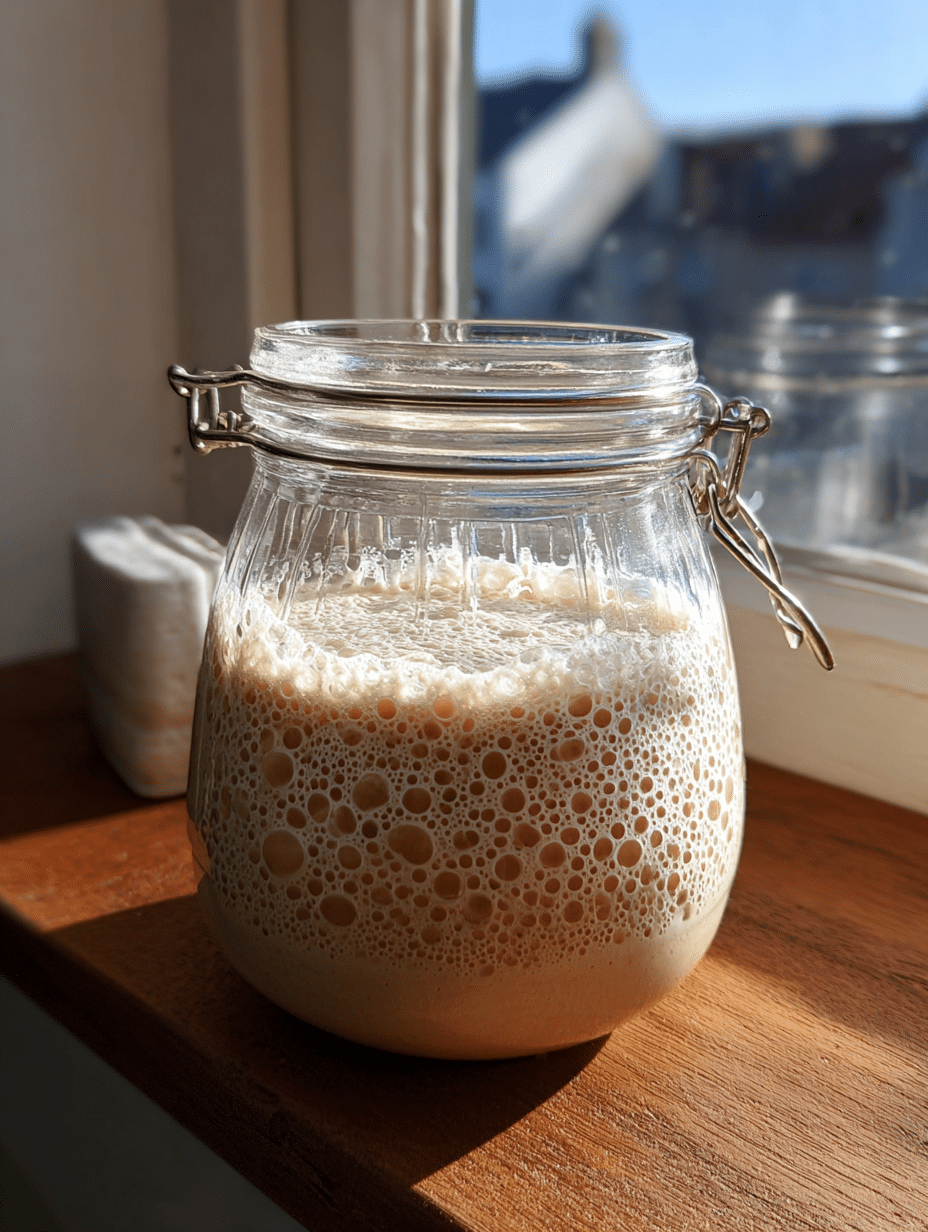
Gluten-free Sourdough Starter
Equipment
- Glass jar (16 oz or larger)
- Measuring cups
- Wooden spoon or spatula
- Breathable jar cover (cloth or loose lid)
Ingredients
- 0.5 cup brown rice flour or sorghum flour
- 0.5 cup filtered or dechlorinated water
Instructions
- On Day 1, mix ½ cup gluten-free flour and ½ cup filtered water in a clean glass jar. Stir until smooth, cover loosely with a cloth or lid, and let sit at room temperature.
- On Days 2–4, discard half the mixture and feed with ½ cup fresh flour and ½ cup water once daily. Stir well and cover again.
- By Days 5–7, your starter should be bubbly and rising. Continue feeding every 12–24 hours depending on activity.
- Once starter doubles in size within 4–6 hours of feeding and passes the float test, it’s ready to bake or store.
Notes
Nutrition
Signs It’s Working
A healthy gluten free starter will:
- Smell pleasantly tangy or yeasty
- Show bubbles throughout after feeding
- Begin to rise and fall predictably
- Double in size within 4–6 hours at peak activity
Don’t worry if yours takes longer—it depends on room temperature, flour type, and hydration. Just keep going. You’ve got this.
Once it’s strong, you can move on to baking your first loaf (like this easy gluten free bread recipe) or store your starter until you’re ready to bake.
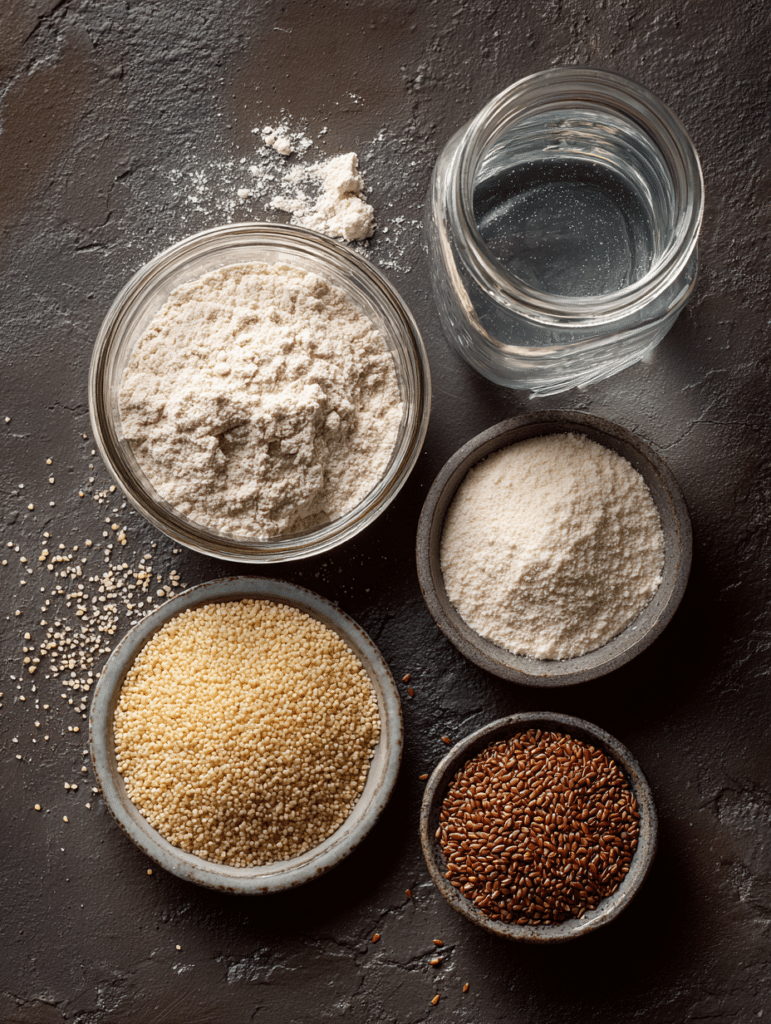
Best Flours for a Gluten Free Starter (And Which to Avoid)
Not All Gluten Free Flours Are Starter-Friendly
Choosing the right flour for your gluten free sourdough starter is where success begins. The best options are whole grain, nutrient-dense flours that naturally support yeast and bacteria growth. They feed your starter well, ferment consistently, and help you build strength and flavor over time.
Flours like brown rice, sorghum, and teff have been tested by gluten free bakers for years—they work because they offer the ideal mix of carbs, minerals, and naturally occurring microbes.
Top Gluten Free Flours for Sourdough Starter
Here are the best-performing flours for gluten free sourdough starters—and what makes each one special:
| Flour | Why It Works |
|---|---|
| Brown Rice Flour | Mild, consistent, and rich in wild yeast. Most beginner-friendly. |
| Sorghum Flour | Subtly sweet, ferments beautifully, adds softness to doughs. |
| Teff Flour | Earthy, mineral-rich, supports active cultures. Adds deep flavor. |
| Buckwheat Flour | Very fermentable, strong flavor, great as a secondary flour. |
Pro tip: Stick with one flour for your starter until it’s well established. Switching flours too often can disrupt microbial growth.
Flours to Avoid in Your Starter
Not every gluten free flour works for sourdough. Here’s what to skip:
- Almond & Coconut Flour: High in fat, low in starch. They go rancid fast and don’t ferment well.
- Tapioca, Arrowroot, Cornstarch: Mostly starch, lack nutrients for yeast to thrive.
- Gluten Free Flour Blends: Inconsistent from brand to brand. Some contain gums or stabilizers that disrupt fermentation.
- Oat Flour (unless certified gluten free): Often cross-contaminated and too soft to support robust fermentation.
If you’re not sure where to begin, start with brown rice flour. It’s affordable, widely available, and dependable. It also pairs well with recipes like these chewy gluten free bagels and soft gluten free dinner breads.
Troubleshooting Your Gluten Free Sourdough Starter
Every Starter Has a Learning Curve (And That’s Okay)
Even experienced bakers run into sourdough issues—and when you’re working without gluten, those quirks can show up fast. But don’t worry: most problems are easy to fix once you know what to look for.
Your gluten free sourdough starter should be bubbly, smell pleasantly tangy, and rise noticeably after feeding. If it’s not? Let’s figure out what’s going on.
Why Isn’t My Starter Rising?
If your starter looks sleepy or flat, try these quick fixes:
- Water too cold: Yeast like warmth. Use room temperature water and keep your jar in a warm (70–75°F) spot.
- Feeding too little or too late: Feed every 24 hours early on—or every 12 hours if it’s bubbling but weak.
- Wrong flour: Avoid low-nutrient flours. Stick to whole grain flours like brown rice or sorghum.
- Chlorinated tap water: Chlorine can kill yeast. Switch to filtered water.
Sometimes all it takes is a consistent routine and a few more days. If you’re past Day 7 and still see no activity, it’s okay to start fresh with new flour.
Common Problems & How to Fix Them
Problem: Starter has a layer of liquid (called “hooch”) on top
Fix: Stir it back in and feed as usual. Hooch means it’s hungry—not ruined.
Problem: It smells like nail polish remover
Fix: That’s too much acid buildup. Discard more than half, feed fresh flour and water.
Problem: White fuzz, orange streaks, or anything pink
Fix: Unfortunately, that’s mold. Toss it and start over. Safety first.
Problem: Still no bubbles after 7 days
Fix: Your flour may be low quality or inactive. Try switching to sorghum or teff flour and keep it warmer.
Real Reader Advice
“My first two attempts failed until I switched from a flour blend to brown rice flour—night and day difference. It finally doubled on Day 6 and now I use it for everything.”
— Jenna C., Oregon
A sluggish starter doesn’t mean you’ve failed—it just means your kitchen ecosystem needs a tweak. Once you get the hang of it, the process becomes second nature. And if you’re not ready to bake a whole loaf, use your starter discard in something easy and cozy like gluten free banana bread.
How to Use and Store Your Starter
When It’s Ready, You’ll Know
A mature gluten free sourdough starter should be doubling in size within 4 to 6 hours of feeding, smell pleasantly tangy (think yogurt or apple cider), and show bubbles throughout. If you feed it and it rises, it’s ready to bake.
One simple way to test it? Try the float test: drop a spoonful into a glass of water. If it floats, it’s airy and active—time to bake!
Want to make bread? You’ll find your starter shines best in recipes like our chewy gluten free sourdough bread or soft sandwich gluten free bread with no gums or fillers.
How to Store It for Long-Term Success
You don’t need to bake daily to keep your starter alive. Once it’s strong, you can shift to a lower-maintenance schedule.
Room Temperature Storage (Daily Use):
- Keep loosely covered on the counter
- Feed every 24 hours (or 12 if it’s very warm)
- Great for active baking schedules
Refrigerator Storage (Weekly Use):
- Store in a jar with a loose lid or breathable cover
- Feed once a week to keep it alive
- Bring to room temp and feed 1–2 times before baking
Freezing:
Yes, you can freeze gluten free starter—but expect a slower bounce-back. For best results, freeze after it’s well established (2–3 weeks old), and thaw overnight in the fridge before reviving with a couple of fresh feeds.
What to Do with Discard
Every time you feed your starter, you’ll remove (or “discard”) a portion. Don’t toss it—it’s great for baking!
Use discard in recipes like:
- Gluten free blueberry muffins
- Gluten free muffins
- Gluten free cake
- Pancakes, waffles, crackers, tortillas, and even pizza crusts
Because discard is unfed starter, it doesn’t rise much—but it adds a delightfully sour edge and soft texture to baked goods. Some bakers even prefer the flavor it brings to quick breads and cakes.
Want to make the most of your starter? Use it in meals too. I love stirring a spoonful into savory dishes, or pairing it with hearty gluten free dinner recipes to round out the meal.
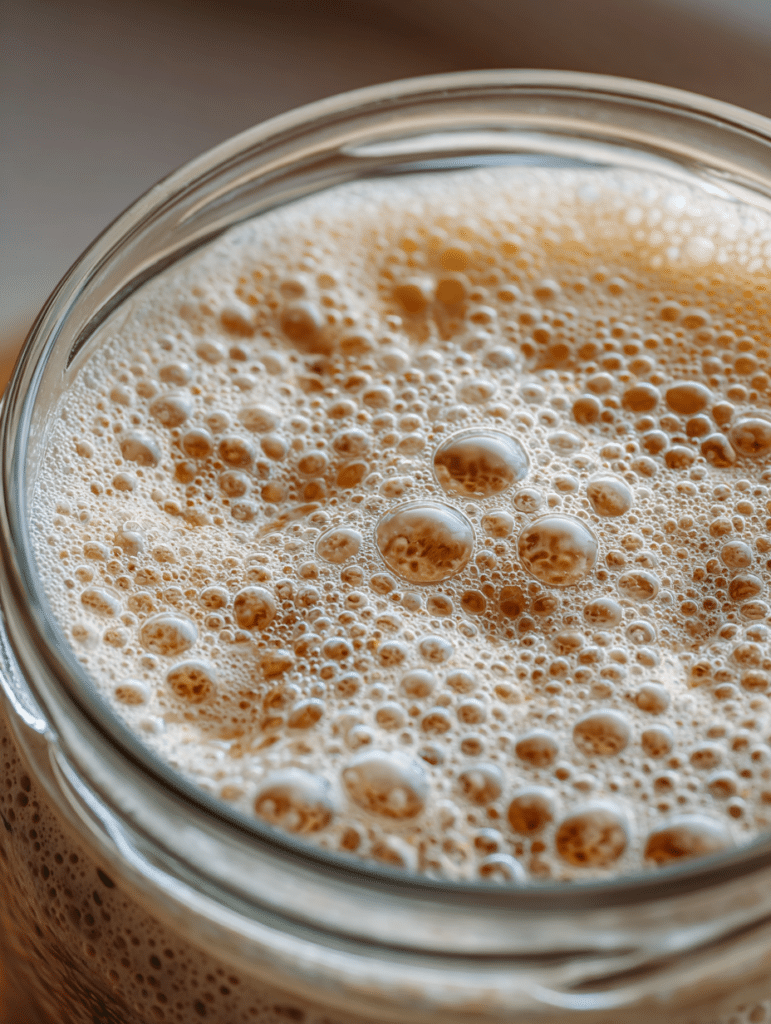
FAQs About Gluten Free Sourdough Starter
Can a gluten free sourdough starter go bad?
Yes, it can. If you see pink, orange, or black streaks, fuzzy mold, or it smells rotten or putrid, discard the starter immediately. Healthy starters smell tangy, not sour in a spoiled way.
How long does it take to make a gluten free sourdough starter?
Most gluten free starters are ready in 5 to 7 days. Warmer kitchens may speed up fermentation, while cooler rooms or low-nutrient flours may slow it down. Full strength is usually achieved after 2 weeks of regular feedings.
Can you make a gluten free starter with just one flour?
Absolutely. Brown rice flour is the most reliable single flour for gluten free starters. It ferments evenly, produces stable activity, and is easy to find. Sorghum and teff also work well solo.
Is gluten free sourdough bread safe for people with celiac disease?
Yes—if all ingredients are certified gluten free and there’s no cross-contamination. Always double-check your flours and baking tools to protect against gluten exposure.
Do you have to feed a gluten free starter every day?
Only during the first week while it’s developing. Once mature, you can store it in the fridge and feed it weekly. If you bake often, daily feedings at room temperature are fine.
Can you freeze gluten free sourdough starter?
Yes, though it may lose some strength. To freeze, place mature starter in an airtight container, label it, and thaw in the fridge before feeding. Expect 1–2 feedings before it returns to full activity.
Final Thoughts: Gluten Free Sourdough Starter Is Easier Than You Think
There’s something deeply satisfying about creating a gluten free sourdough starter from scratch. It connects you to the rhythms of traditional baking—slow, simple, and alive. With just flour, water, and a few minutes each day, you can build something that nourishes both body and spirit.
If you’ve been intimidated by the idea of sourdough, let this be your invitation to begin. You don’t need fancy tools or perfect conditions. Just start. And when things feel uncertain, remember—even if you mess up, you can always try again.
Your starter can become the base for so many comforting recipes: crusty loaves, fluffy pancakes, rich muffins, or even hearty gluten free dinners. It’s not just a project, it’s a kitchen companion.
From one home cook to another, I promise: sourdough is for you, too.