Disclaimer: This content is for educational purposes only, not medical advice. Always consult with a doctor before making significant changes to your diet, especially if you have pre-existing health conditions.
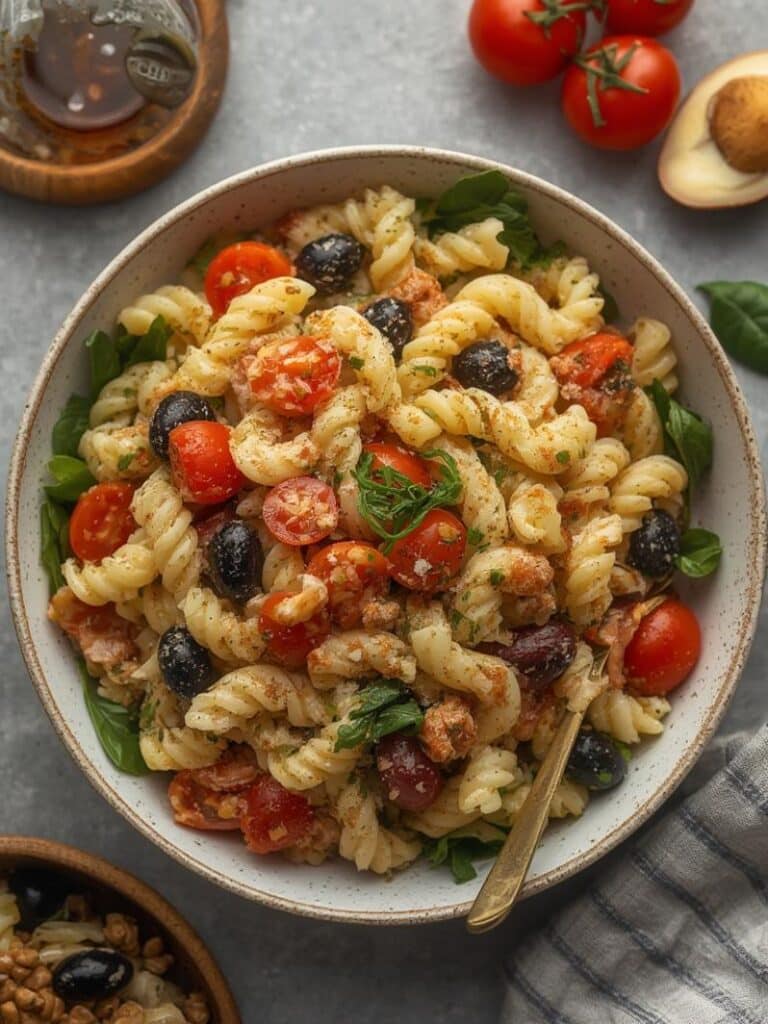
The moment I toss together my mediterranean pasta salad, I’m instantly transported back to my grandmother’s kitchen in Asheville. Growing up in those North Carolina mountains, I learned that the best dishes don’t need fancy techniques or hard-to-find ingredients. This mediterranean pasta salad recipe has been my go-to for potlucks, family gatherings, and quick weeknight meals for years. The combination of tender pasta, juicy tomatoes, briny olives, and tangy feta creates a symphony of Mediterranean flavors that never fails to delight. Today, I’m sharing my perfected version that balances simplicity with vibrant flavors.
IN THIS ARTICLE
Key Takeaways: What You Need To Know
– This mediterranean pasta salad comes together in just 25 minutes from start to finish
– Use al dente pasta (slightly firm) to maintain texture even after refrigeration
– The homemade dressing features olive oil, red wine vinegar, lemon, and herbs for authentic flavor
– Add protein like grilled chicken or chickpeas to transform this into a complete meal
– This salad stores beautifully for up to 4 days, making it perfect for meal prep
– Customize with seasonal vegetables while maintaining the classic Mediterranean flavor profile
What Makes A Mediterranean Pasta Salad So Irresistible?
Mediterranean pasta salad combines al dente pasta with fresh vegetables, olives, feta cheese, and herbs dressed in olive oil and vinegar, creating a balanced dish that’s both nutritious and flavorful, reflecting the healthy principles of Mediterranean cuisine.
Growing up in Asheville, my introduction to Mediterranean cuisine came through potlucks at my neighbor Mrs. Stavros’ house. Her pasta salad always disappeared first, and for good reason. The mediterranean pasta salad bridges comfort food with fresh, vibrant ingredients in a way that few dishes can match.
Why Mediterranean Flavors Work So Well Together
The magic of this salad lies in its perfect balance. The acid from tomatoes and lemon juice cuts through the richness of olive oil and feta. Meanwhile, the pasta provides a neutral canvas that carries all these bold flavors. According to the [Harvard School of Public Health], the Mediterranean diet represents one of the healthiest eating patterns globally.
In my kitchen, I’ve found that the key is quality ingredients. When I use locally grown tomatoes from the Asheville farmers’ market and good olive oil, the difference is immediately noticeable. These simple ingredients create complex flavors that transport you straight to a seaside taverna.
The Health Benefits Behind This Classic Dish
This isn’t just a delicious salad—it’s packed with nutrition too. The mediterranean pasta salad incorporates several components of the Mediterranean diet pyramid:
| Ingredient | Health Benefit |
|---|---|
| Olive Oil | Heart-healthy monounsaturated fats |
| Fresh Vegetables | Fiber, vitamins, and antioxidants |
| Feta Cheese | Calcium and protein with lower fat than many cheeses |
| Herbs | Antioxidants and anti-inflammatory compounds |
When I make this salad for my family, I know I’m not just serving something delicious, but also nourishing them with a balanced meal. It pairs wonderfully with my Mediterranean meatballs for a complete dinner that never disappoints.
Essential Ingredients For An Authentic Mediterranean Pasta Salad
Authentic mediterranean pasta salad requires quality short pasta (rotini or penne), fresh vegetables (tomatoes, cucumbers, bell peppers), kalamata olives, feta cheese, red onion, and a dressing of extra virgin olive oil, red wine vinegar, lemon juice, and fresh herbs.
The soul of any great recipe lies in its ingredients. For mediterranean pasta salad, each component plays a crucial role in building that characteristic flavor profile that’s simultaneously bright, tangy, savory, and satisfying.
The Perfect Pasta Base: Which Shapes Work Best?
Mediterranean pasta salad begins with the right pasta, and not all shapes are created equal. During my years of recipe testing, I’ve found that short pastas with ridges or curves hold the dressing beautifully.
My top choices include:
1. Rotini – The spirals catch dressing in their coils
2. Farfalle (bow ties) – Playful shape with texture variation
3. Penne – Hollow centers fill with dressing and herbs
4. Fusilli – Similar to rotini but with tighter coils
The key is cooking the pasta correctly. After countless trials in my Asheville kitchen, I’ve found that cooking pasta 1 minute less than the package instructions creates the perfect al dente texture that won’t turn mushy after sitting in dressing.
One mistake I made early on was not salting my pasta water enough. Now I always use water “as salty as the Mediterranean sea” (about 1-2 tablespoons salt per gallon of water) for properly seasoned pasta.
Fresh Vegetables And Mediterranean Mix-Ins
The vibrant vegetables and mix-ins transform simple pasta into a mediterranean masterpiece. During summer, I love wandering through our local Asheville farmers’ markets to find the freshest produce for my salads.
For an authentic mediterranean pasta salad, include:
| Essential Components | Why They Matter |
|---|---|
| Cherry Tomatoes | Sweet acidity that balances the savory elements |
| Persian or English Cucumbers | Crisp texture and refreshing coolness |
| Kalamata Olives | Distinctive briny flavor that defines Mediterranean cuisine |
| Feta Cheese | Creamy, tangy counterpoint to the vegetables |
| Red Onion | Sharp flavor that becomes milder when marinated in dressing |
| Bell Peppers | Sweet crunch and vibrant color |
| Fresh Herbs (basil, oregano, parsley) | Aromatic freshness that elevates all other flavors |
A tip I’ve discovered over years of making this salad: dice everything into similar small bite-sized pieces. This ensures you get a perfect balance of flavors in every forkful. For added protein, I sometimes include chickpeas, which are featured in my popular Mediterranean chickpea salad recipe.
The Perfect Mediterranean Dressing From Scratch
The ideal mediterranean pasta salad dressing combines 1/2 cup extra virgin olive oil, 1/4 cup red wine vinegar, 2 tablespoons fresh lemon juice, 1 teaspoon each of dried oregano and garlic powder, 1/2 teaspoon Dijon mustard, and salt and pepper to taste for a balanced vinaigrette.
The dressing is where this mediterranean pasta salad truly comes alive. After years of experimenting in my Asheville kitchen, I’ve perfected a vinaigrette that strikes the perfect balance between tangy and savory, with aromatic herbs that elevate every bite.
How To Make A Balanced Vinaigrette That Pops
The ideal Mediterranean dressing follows a simple ratio of 2 parts oil to 1 part acid, with herbs and seasonings to taste. Here’s my never-fail formula:
Mediterranean Pasta Salad Vinaigrette:
– 1/2 cup extra virgin olive oil (always use good quality)
– 1/4 cup red wine vinegar
– 2 tablespoons fresh lemon juice
– 1 teaspoon dried oregano (or 1 tablespoon fresh)
– 1 teaspoon garlic powder (or 2 cloves minced fresh garlic)
– 1/2 teaspoon Dijon mustard (helps emulsify the dressing)
– 3/4 teaspoon sea salt
– 1/2 teaspoon freshly ground black pepper
– 1/2 teaspoon honey (optional, to balance acidity)
The secret I’ve learned is to combine all ingredients except the olive oil first, then slowly drizzle in the oil while whisking vigorously. This creates an emulsion that clings beautifully to every pasta ridge and vegetable.
I often make a double batch of this dressing to keep in my refrigerator for quick salads throughout the week. It’s also wonderful on my Mediterranean quinoa salad when I’m looking for a grain alternative.
Should You Add Herbs And Spices?
Fresh herbs transform a good mediterranean pasta salad into an exceptional one. Growing up in Asheville, I was lucky to have access to a backyard herb garden, and I still believe fresh herbs make all the difference.
My essential herbs for Mediterranean flavor include:
1. Basil – Sweet, aromatic, and quintessentially Mediterranean
2. Oregano – The defining herb of Greek cooking
3. Parsley – Brings brightness and clean flavor
4. Mint – A small amount adds unexpected freshness (my grandmother’s secret addition)
For dried spices, I recommend:
– Dried oregano (if fresh isn’t available)
– A pinch of red pepper flakes for gentle heat
– Ground black pepper (always freshly ground)
One technique I’ve learned is to rub dried herbs between your palms before adding them to the dressing. This helps release their essential oils and intensifies their flavor. When using fresh herbs, add most just before serving to preserve their vibrant color and flavor, but mix a small amount into the dressing as well.
Step-By-Step Mediterranean Pasta Salad Recipe
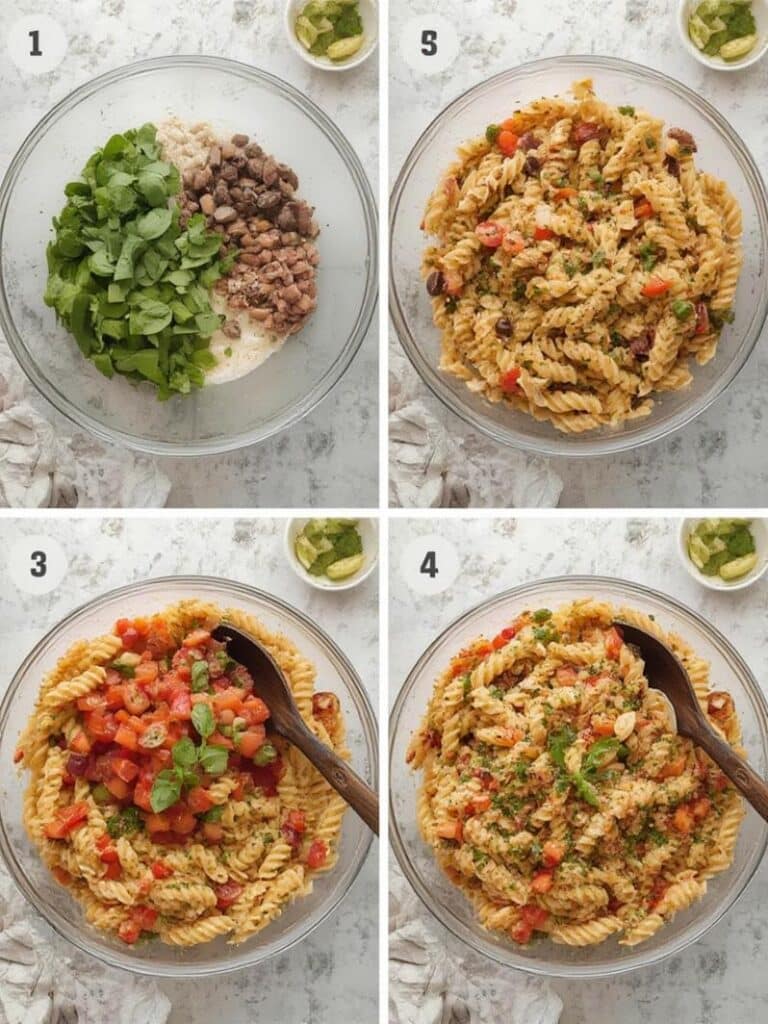
To make mediterranean pasta salad, cook 12oz pasta al dente, prepare vegetables while pasta cools, whisk dressing ingredients together, combine pasta with vegetables and mix-ins, pour dressing over, toss well, and refrigerate for at least 30 minutes before serving garnished with fresh herbs.
After years of perfecting this recipe in my Asheville kitchen, I’ve developed a foolproof method that ensures perfect results every time. This mediterranean pasta salad recipe comes together in about 25 minutes of active time, plus cooling and marinating.
How To Prep And Cook For Perfect Results
Ingredients:
– 12 oz (340g) rotini pasta (or penne, farfalle)
– 1 pint cherry tomatoes, halved
– 1 English cucumber, diced
– 1 red bell pepper, diced
– 1/2 red onion, finely diced
– 3/4 cup kalamata olives, halved
– 6 oz (170g) feta cheese, cubed or crumbled
– 1/4 cup fresh basil, chopped
– 2 tablespoons fresh parsley, chopped
For the dressing:
– 1/2 cup extra virgin olive oil
– 1/4 cup red wine vinegar
– 2 tablespoons fresh lemon juice
– 1 teaspoon dried oregano
– 1 teaspoon garlic powder
– 1/2 teaspoon Dijon mustard
– 3/4 teaspoon sea salt
– 1/2 teaspoon freshly ground black pepper
Step-by-step instructions:
1. Bring a large pot of heavily salted water to a rolling boil. Add pasta and cook until al dente, about 1 minute less than package instructions.
2. Drain pasta in a colander and rinse briefly with cold water to stop the cooking process. Toss with a drizzle of olive oil to prevent sticking.
3. While pasta cools, prepare all vegetables. I like to dice everything into roughly 1/2-inch pieces for even distribution.
4. In a small bowl or jar, combine all dressing ingredients. Whisk vigorously (or shake if using a jar with lid) until emulsified.
5. In a large serving bowl, combine cooled pasta with prepared vegetables, olives, and half of the feta cheese.
6. Pour dressing over the salad and toss gently but thoroughly to coat all ingredients.
7. Refrigerate for at least 30 minutes before serving to allow flavors to meld.
8. Just before serving, add remaining feta cheese, sprinkle with fresh herbs, and toss once more.
A crucial tip I’ve learned: always taste and adjust seasoning right before serving. Pasta tends to absorb salt as it sits, so you might need an extra sprinkle of salt or squeeze of lemon to brighten the flavors.
Can You Make It Ahead? Storage Tips And Tricks
One of the reasons I love mediterranean pasta salad is its make-ahead convenience. In fact, it often tastes better after the flavors have had time to develop.
For make-ahead success:
1. Cook pasta slightly more al dente than usual if making more than 4 hours ahead
2. Reserve some of the dressing to add just before serving
3. Keep most fresh herbs out until serving time
4. Store in an airtight container in the refrigerator
The pasta salad will keep well for up to 4 days in the refrigerator. I often make a big batch on Sunday to enjoy for quick lunches throughout the week. It pairs beautifully with my Mediterranean salmon for a protein boost.
Before serving leftover salad, let it sit at room temperature for about 15-20 minutes. The olive oil can solidify slightly in the refrigerator, and this brings the dressing back to the right consistency. A quick toss and perhaps a splash of fresh lemon juice will revive all the flavors.
Customizing Your Mediterranean Pasta Salad
Customize mediterranean pasta salad by adding proteins like grilled chicken, shrimp, or chickpeas, incorporating seasonal vegetables such as artichokes, roasted red peppers, or sun-dried tomatoes, and adjusting to dietary needs with gluten-free pasta or dairy-free alternatives to feta cheese.
The beauty of mediterranean pasta salad lies in its flexibility. The classic version serves as a perfect canvas for customization based on your preferences, what’s in season, or dietary needs. Growing up in Asheville with its vibrant farmers’ markets, I learned to adapt recipes based on seasonal availability.
What Proteins Work Best As Add-Ins?
Adding protein transforms this mediterranean pasta salad from a side dish into a complete meal. My favorite protein additions include:
1. Grilled Chicken – Seasoned simply with lemon, garlic, and oregano
2. Chickpeas – For plant-based protein that complements the Mediterranean theme
3. Tuna – High-quality olive oil-packed tuna adds richness
4. Grilled Shrimp – Quick-cooking and takes on the flavors of the dressing beautifully
5. Salami or Prosciutto – For a non-traditional but delicious Italian-Mediterranean fusion
I often prepare the base salad and then divide it, adding different proteins to portions throughout the week for variety. When adding chicken or shrimp, I recommend my Mediterranean seasoning blend for consistent flavor.
A professional tip: For protein add-ins, season and cook them separately before adding to the salad. This ensures each element is perfectly cooked and seasoned.
Seasonal Variations And Dietary Adaptations
The mediterranean pasta salad adapts beautifully to seasonal ingredients and dietary requirements. Here are my favorite variations:
Seasonal Adaptations:
– Spring: Add blanched asparagus and fresh peas
– Summer: Incorporate grilled zucchini and more fresh basil
– Fall: Include roasted butternut squash and toasted pine nuts
– Winter: Mix in roasted red peppers and sun-dried tomatoes
Dietary Adaptations:
– Gluten-Free: Use gluten-free pasta (corn and rice blends hold up best)
– Dairy-Free: Substitute avocado chunks for feta, or use a plant-based feta alternative
– Low-Carb: Replace half the pasta with extra vegetables or try a chickpea pasta
– Vegan: Omit the cheese or use a vegan alternative, and add olives for saltiness
For a Mediterranean breakfast twist, I sometimes use leftover pasta salad as the base for a morning grain bowl, topped with a poached egg. This was inspired by my Mediterranean breakfast recipes collection.
Remember to adjust the dressing when making substantial changes to the ingredients. If adding more vegetables, you might need additional dressing to properly coat everything.
Serving Ideas And Meal Pairings
Mediterranean pasta salad works perfectly as a standalone meal with added protein, as a side dish for grilled meats or fish, packed in lunch boxes, served at room temperature for picnics and potlucks, or as part of a larger Mediterranean mezze spread with hummus and pita.
In my Asheville home, this mediterranean pasta salad has made appearances at everything from casual weeknight dinners to special celebrations. Its versatility makes it suitable for almost any occasion, and knowing how to pair it elevates your entire meal.
When Is The Best Time To Serve Mediterranean Pasta Salad?
This versatile dish shines in numerous settings:
– Weeknight Dinners: Prepare it on Sunday and enjoy throughout the week
– Potlucks and Picnics: It travels well and doesn’t require reheating
– Lunch Boxes: A complete meal that’s satisfying and nutritious
– Barbecues and Cookouts: The perfect side to grilled meats
– Dinner Parties: Serve as a starter or side for a Mediterranean-themed meal
– Holiday Buffets: A lighter option among typically heavy holiday fare
The mediterranean pasta salad holds well at room temperature for up to 2 hours, making it ideal for outdoor gatherings. I’ve learned to bring it to summer potlucks in Asheville where it always disappears quickly!
For special occasions, I serve it in a large, shallow bowl and garnish with extra fresh herbs, lemon zest, and a drizzle of high-quality olive oil for a beautiful presentation.
What Dishes Complement This Mediterranean Classic?
Mediterranean pasta salad pairs beautifully with numerous main courses and can be part of a larger spread. Here are my favorite pairings:
| Type of Pairing | Recommended Dishes |
|---|---|
| Grilled Proteins | Lemon-herb grilled chicken, Greek souvlaki, grilled salmon |
| Mediterranean Mains | Moussaka, spanakopita, lamb kofta |
| Mezze Spread | Hummus, tzatziki, stuffed grape leaves, pita bread |
| Soups | Avgolemono (Greek lemon soup), tomato bisque |
For a complete Mediterranean feast, I often serve this pasta salad alongside my Mediterranean bean salad and Mediterranean grain bowls.
When serving mediterranean pasta salad as part of a larger spread, consider offering small portions in individual cups or mason jars. This not only looks appealing but makes it easy for guests to enjoy while mingling.
Reader Success Stories And Variations
“I’ve made this mediterranean pasta salad three times now, and it’s become my family’s summer favorite! I added some grilled chicken and used whole wheat pasta for extra nutrition. The dressing is absolutely perfect – I now make double batches to use on other salads too. Thank you for this foolproof recipe!” – Maria from Colorado
“As someone with celiac disease, I was thrilled to find this recipe works beautifully with gluten-free pasta. I used Jovial brand brown rice fusilli and added artichoke hearts and sun-dried tomatoes. Even my non-GF friends couldn’t tell the difference!” – James from Seattle
“I prepared this for a potluck at work and came home with an empty bowl and requests for the recipe. The combination of flavors is spot on, and I love how it gets even better after sitting in the fridge overnight. Next time I’ll try it with chickpeas for a vegetarian protein option.” – Samantha from Atlanta
These testimonials reflect the versatility of this mediterranean pasta salad and how home cooks across America have adapted it to their needs. The core Mediterranean flavors provide a reliable foundation that welcomes creative variations.
My Asheville cooking workshops often feature this recipe as a starting point for learning about Mediterranean cuisine. Students appreciate how approachable it is while teaching fundamental techniques like making vinaigrette and cooking pasta properly.
For those interested in exploring more Mediterranean recipes, my Mediterranean snacks collection and ground beef recipes offer wonderful complementary dishes.
Frequently Asked Questions About Mediterranean Pasta Salad
How Do I Keep My Pasta Salad From Getting Soggy?
Preventing soggy pasta salad requires attention to a few key details:
1. Cook pasta properly: Always cook pasta al dente (with a slight firmness). For pasta salad, I cook it 1 minute less than the package instructions recommend.
2. Cool pasta correctly: After draining, rinse briefly with cold water to stop the cooking process. Then, toss with a small amount of olive oil to prevent sticking.
3. Pat dry vegetables: Especially watery vegetables like tomatoes and cucumbers. Extra moisture can make your salad soggy.
4. Consider when to dress: For events more than 4 hours away, keep the dressing separate until 30 minutes before serving.
5. Use pasta with texture: Shapes with ridges or curves (like rotini or fusilli) hold up better than smooth shapes.
A professional tip I’ve learned: When using cherry tomatoes, remove some of the seeds and gel before adding them to reduce excess moisture in your salad.
What Are The Most Common Mistakes To Avoid?
After teaching countless mediterranean pasta salad workshops in Asheville, I’ve noticed several common pitfalls:
1. Overcooking pasta: This is the most frequent mistake. Soft pasta breaks down in the dressing.
2. Under-seasoning: Pasta needs plenty of salt in the cooking water, and the salad often needs more salt than you might expect.
3. Cutting vegetables inconsistently: Aim for uniform, bite-sized pieces for even distribution of flavors.
4. Using low-quality olive oil: Since the dressing is so simple, the quality of olive oil makes a significant difference.
5. Not allowing time for flavors to meld: This salad improves after at least 30 minutes of marinating.
6. Adding delicate herbs too early: Fresh basil and parsley can blacken. Add most just before serving, reserving some for garnish.
7. Forgetting to toss before serving: The dressing settles at the bottom, so always toss again right before serving.
For those looking to explore other Mediterranean dishes, my Mediterranean rice recipes employ many of these same techniques and flavor principles.
Remember that cooking is both science and art. This mediterranean pasta salad is forgiving and adaptable, so don’t worry if you need to make substitutions based on what’s available in your pantry or local market.
—
I hope this comprehensive guide helps you create the perfect mediterranean pasta salad! As with all my recipes from my Asheville kitchen to yours, the most important ingredient is the love you put into the cooking. Enjoy the process, make it your own, and share the delicious results with those you care about.